
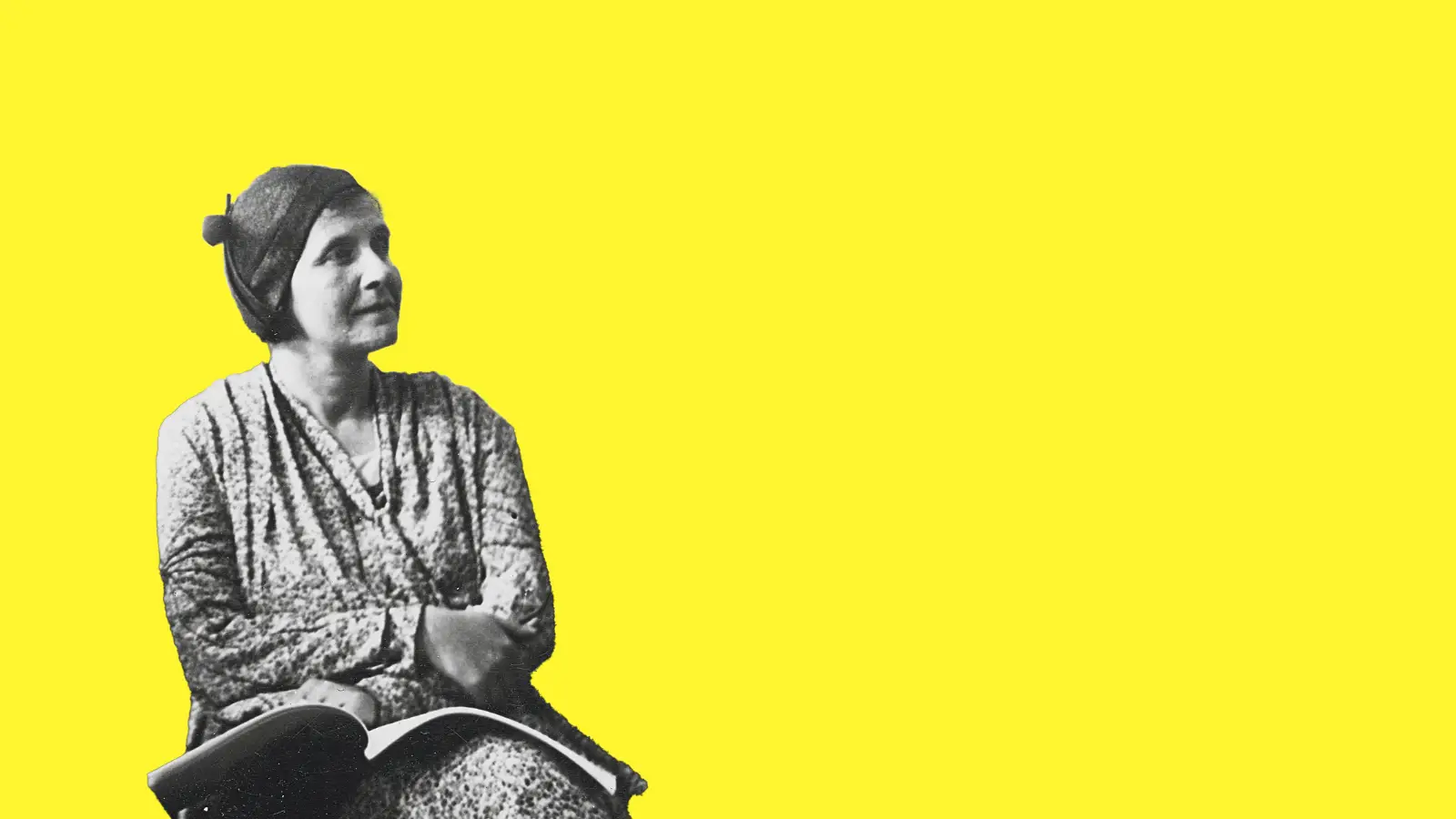
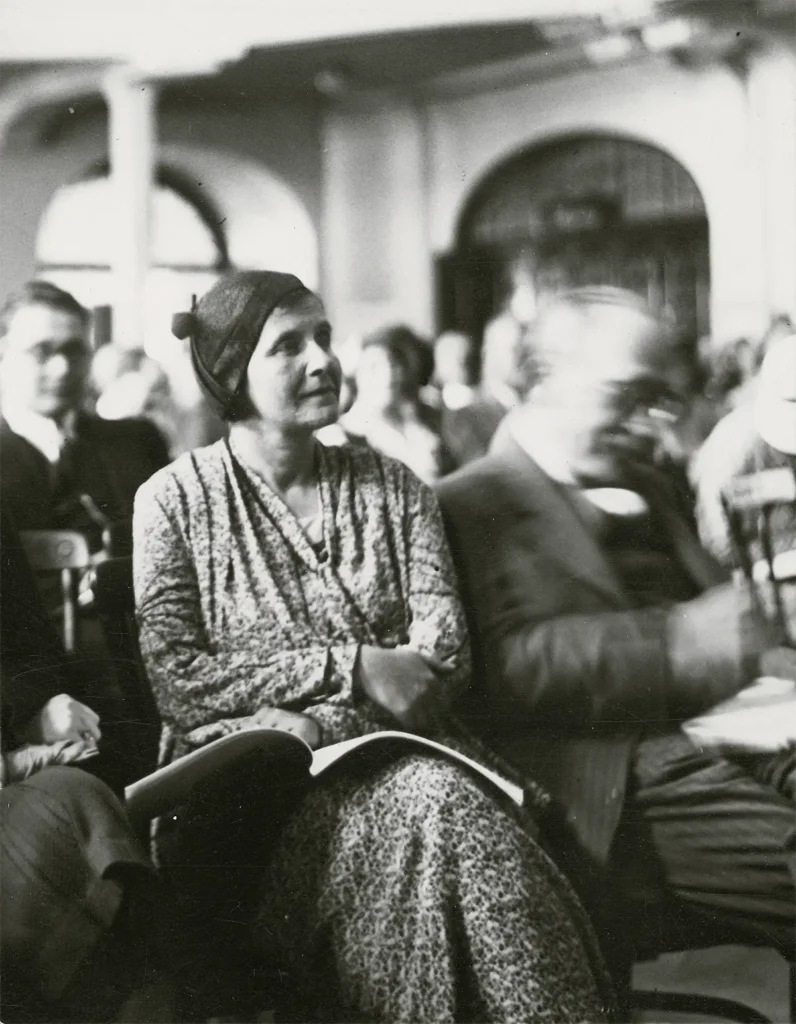
In 1928, just before the opening of a major Van Gogh exhibition in the Kunstsalon Paul Cassirer in Berlin, the art dealer Otto Wacker supplied four additional paintings1. Although they had previously been recognised as authentic by established experts, the curators, Grete Ring (1887–1952) and Walter Feilchenfeldt questioned their authenticity. Ring and Feilchenfeldt withdrew the four paintings, and the case soon developed into one of the most notorious forgery scandals of the period. Further research showed that thirty-three disputed Van Gogh paintings could be traced back to Otto Wacker, including works that had previously been described in catalogues as either weak or false2.
At a time when women remained significantly underrepresented in the art world, Ring held a leading position at the Kunstsalon Paul Cassirer and challenged the judgments of established male connoisseurs who had accepted or certified Wacker’s works. Her withdrawal of these paintings offered a revealing point of entry into a career shaped by tensions of gender, ethnicity, and national belonging, and situated between the scholarly monograph and the commercial gallery, between Berlin and London, between the old world of European connoisseurship and the new realities of exile.
Ring on Art History and Its Limits
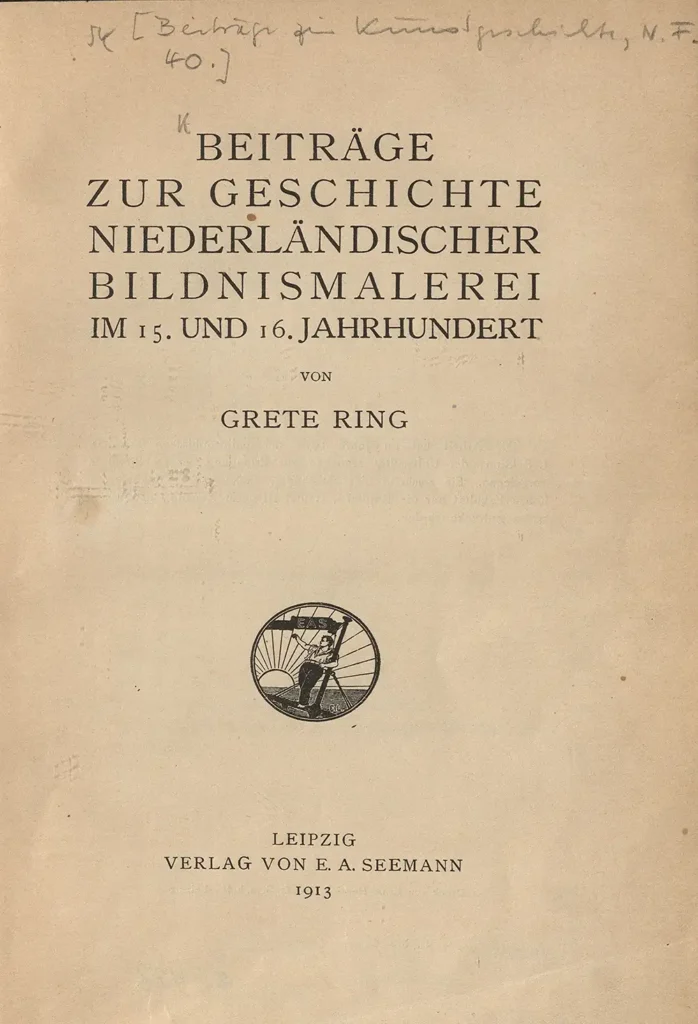
Grete Ring was born into the cultured Jewish elite in Berlin in 1887. Her uncle was the painter Max Liebermann3. She was one of the first women to earn a doctorate in art history in 1912, under the supervision of Heinrich Wölfflin in Munich4 (Fig.1).
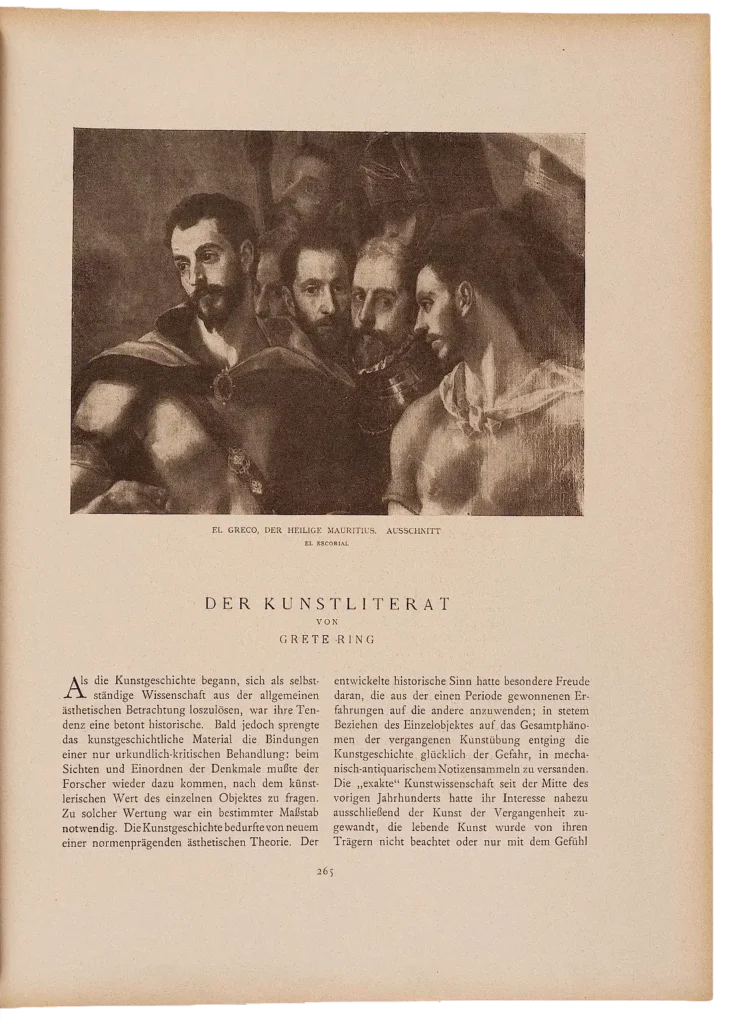
In 1920, the scholar Ring published the essay Der Kunstliterat in the journal Kunst und Künstler, vol. 18 (Fig.2). Ring begins by looking back at the formation of art history as an independent discipline. She argues that, once art history had moved beyond purely documentary and archival methods, the material of art history itself “burst the bonds of a merely documentary-critical treatment” („sprengte das kunstgeschichtliche Material die Bindungen einer nur urkundlich-kritischen Behandlung“)5. The classification and interpretation of monuments necessarily brought scholars back to questions of artistic value, while the constant relation of the individual work to the broader phenomenon of past artistic practice prevented the discipline from sinking into “mechanical-antiquarian note-collecting” („mechanisch-antiquarischem Notizensammeln“)6.
Yet Ring’s argument quickly turns to the potential dangers of this development. The problem begins when concepts derived from the art of the past are transferred to living art and are no longer used merely to interpret artistic developments retrospectively, but to prescribe them in advance. As she puts it, the relationship between art history and contemporary art remains healthy as long as scholarship follows the paths taken by artists. It becomes problematic when the historian attempts to produce such a development himself. In periods dominated by normative aesthetics, theory is particularly tempted to “prejudge” art and to tell the artist what he is permitted or obliged to do7.
This distinction is central to Ring’s use of Alois Riegl’s concept of Kunstwollen. She insists that Kunstwollen is not identical with the conscious intention of the individual artist: it must be read out of works rather than projected into them8. For Ring, the critic or art historian therefore becomes dangerous precisely when theoretical categories cease to emerge from artistic production and instead begin to dictate it.
The essay was self-reflexive. By questioning the proper limits of art-historical and critical authority, Ring demonstrated a notable awareness of the methodological responsibilities of the discipline.
The Forgeries, Between Connoisseurship and Commerce
A profound contribution of Ring’s practice can be seen in the Van Gogh exhibition and ensuing trial in 1932. The authentication of Wacker’s alleged Van Goghs was performed by the prominent male experts: de la Faille, Meier-Graefe and Rosenhagen.9
Ring’s own intervention took place in the practical context of exhibition preparation. She rejected Wacker’s alleged Van Goghs during the preparations for the exhibition and, after further research, reported the case to the Berlin criminal police10. Her involvement in the Otto Wacker case shows that her competence was tightly linked with her commercial responsibilities.
At the same time, this authority remained precarious. Ring was working in a field shaped largely by male scholars, dealers, and connoisseurs, and she was a Jewish professional in a Germany increasingly marked by antisemitism11. Her judgement gained force precisely in a situation in which expertise had to be argued, documented and publicly defended.
The Exile and the Transatlantic Legacy
The 1938 emigration marked a new stage of Ring’s career. Ring left Berlin and moved to London that year, and took a leading role at Paul Cassirer Ltd. In 1949, Ring published A Century of French Painting, 1400–1500 with Phaidon Press, a major study that established her longstanding research on fifteenth-century French painting in monographic form. The book was later regarded as a standard work in the field12.
Ring shows that her understanding of art-historical authority was grounded in methodological restraint through her essay Der Kunstliterat. For her, art-historical concepts had to emerge from a close study of artworks and past artistic developments. While the critic or art historian could interpret and evaluate, they should not replace artistic production with theoretical expectation.
This position also clarifies the significance of Ring’s later practice between scholarship and the art market. In the Wacker case, visual judgement, attribution, provenance research, and exhibition work formed interdependent modes of expertise. Ring’s career therefore offers a particularly revealing example of the intersections between academic art history and commercial practice. Her case suggests how art-historical authority in the early twentieth century could be shaped in spaces where scholarship, criticism, the market, and public debate overlapped.
XINRAN MAO absolvierte von April bis Juli 2026 ein Praktikum am Zentralinstitut für Kunstgeschichte.
- Lucy Wasensteiner & Viktoria Krieger (ed.): Grete Ring. Kunsthändlerin der Moderne, Dresden 2023, pp. 37–39 ↩︎
- Grete Ring: Der Fall Wacker, in: Kunst und Künstler. Illustrierte Monatsschrift für bildende Kunst und Kunstgewerbe 31, 1932, pp. 153–165, p. 154. ↩︎
- Marianne Feilchenfeldt: Grete Ring: Kunsthistorikerin – Kunsthändlerin (1887–1952), in: Correspondances. Festschrift für Margret Stuffmann zum 24. November 1996, ed. by Hildegard Bauereisen and Martin Sonnabend, Mainz 1996, pp. 200–204, p. 200. ↩︎
- Rahel E. Feilchenfeldt: Grete Ring als Kunsthistorikerin im Exil, in: Grenzen überschreiten. Frauen, Kunst und Exil, ed. by Ursula Hudson-Wiedenmann and Beate Schmeichel-Falkenberg, Würzburg 2005, pp. 131–150, p. 133. ↩︎
- Grete Ring: Der Kunstliterat, in: Kunst und Künstler. Illustrierte Monatsschrift für bildende Kunst und Kunstgewerbe 18, 1920, pp. 265–273, p. 265. ↩︎
- ibid. ↩︎
- ibid. p. 266. ↩︎
- ibid. ↩︎
- Grete Ring: Der Fall Wacker, in: Kunst und Künstler. Illustrierte Monatsschrift für bildende Kunst und Kunstgewerbe 31, 1932, pp. 153–165, p. 153. ↩︎
- Lucy Wasensteiner & Viktoria Krieger (ed.): Grete Ring. Kunsthändlerin der Moderne, Dresden 2023, pp. 37–39, p. 39. ↩︎
- Rahel E. Feilchenfeldt: Grete Ring als Kunsthistorikerin im Exil, in: Grenzen überschreiten. Frauen, Kunst und Exil, ed. by Ursula Hudson-Wiedenmann and Beate Schmeichel-Falkenberg, Würzburg 2005, pp. 131–150, p. 147. ↩︎
- Marianne Feilchenfeldt: Grete Ring: Kunsthistorikerin – Kunsthändlerin (1887–1952), in: Correspondances. Festschrift für Margret Stuffmann zum 24. November 1996, ed. by Hildegard Bauereisen and Martin Sonnabend, Mainz 1996, pp. 200–204, p. 203. ↩︎
Schreibe einen Kommentar